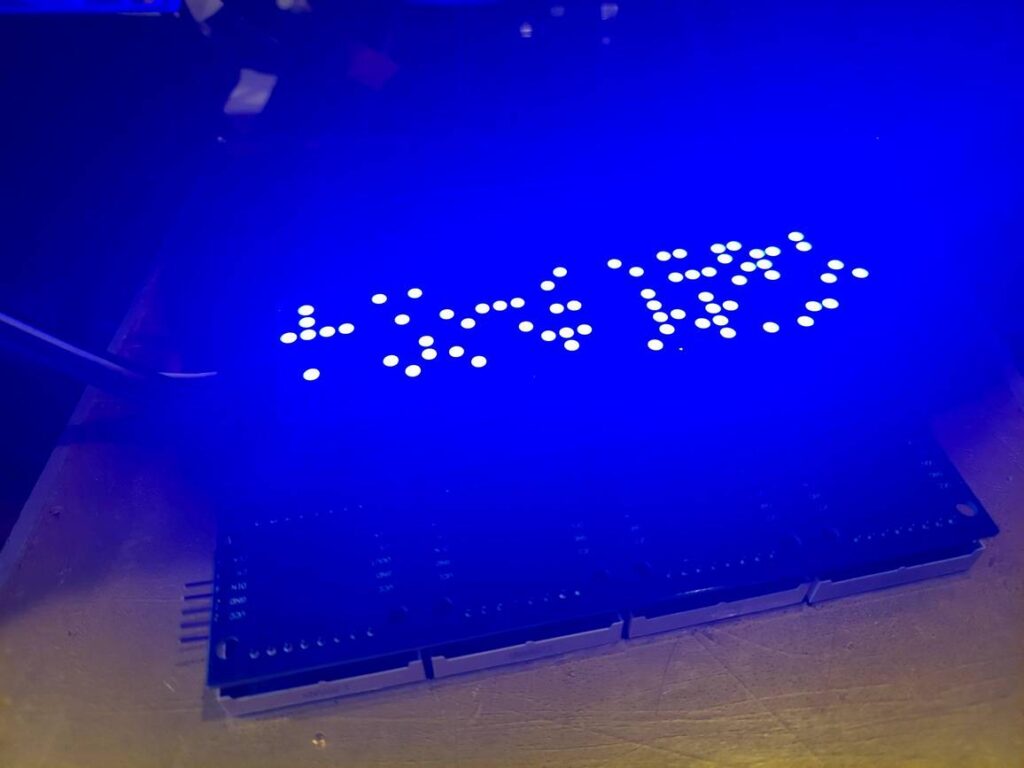
Specialty chips like the MAX7219 can make visually-striking devices easier to work with. The ‘7219 is designed to drive an 8×8 matrix of LEDs, from a single SPI input. Additional modules can be easily added to the chain, allowing the creation of larger displays. A few helper C functions fold the pixels into the usual rectangular shape even if they’re not wired that way. With the SPI interface, updates are fast — at least several dozen Hz for four modules (32×8).
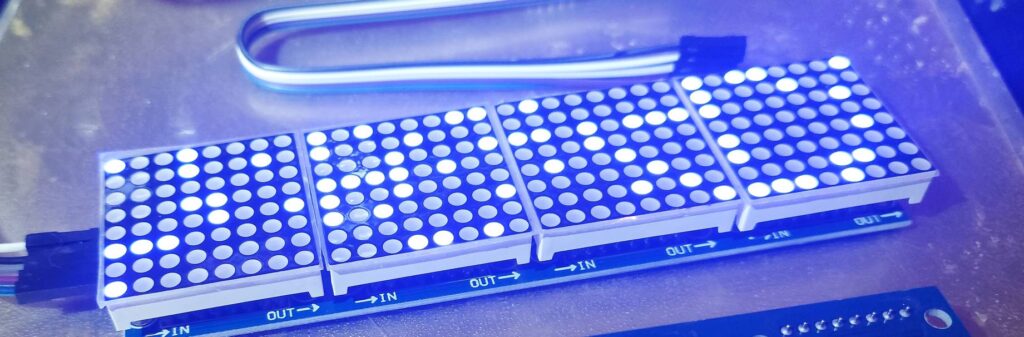
(They’re blue, not pale-blue or white — but even the lowest brightness overpowers the camera.)
The only limit (other than supply current, which could be supplied) is update time.
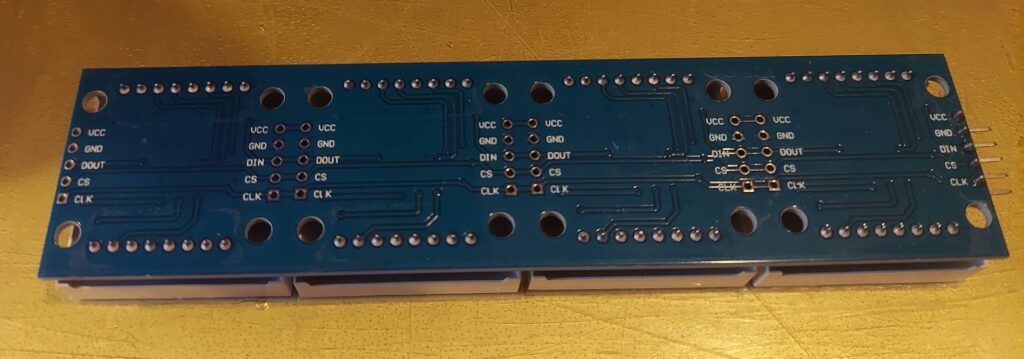
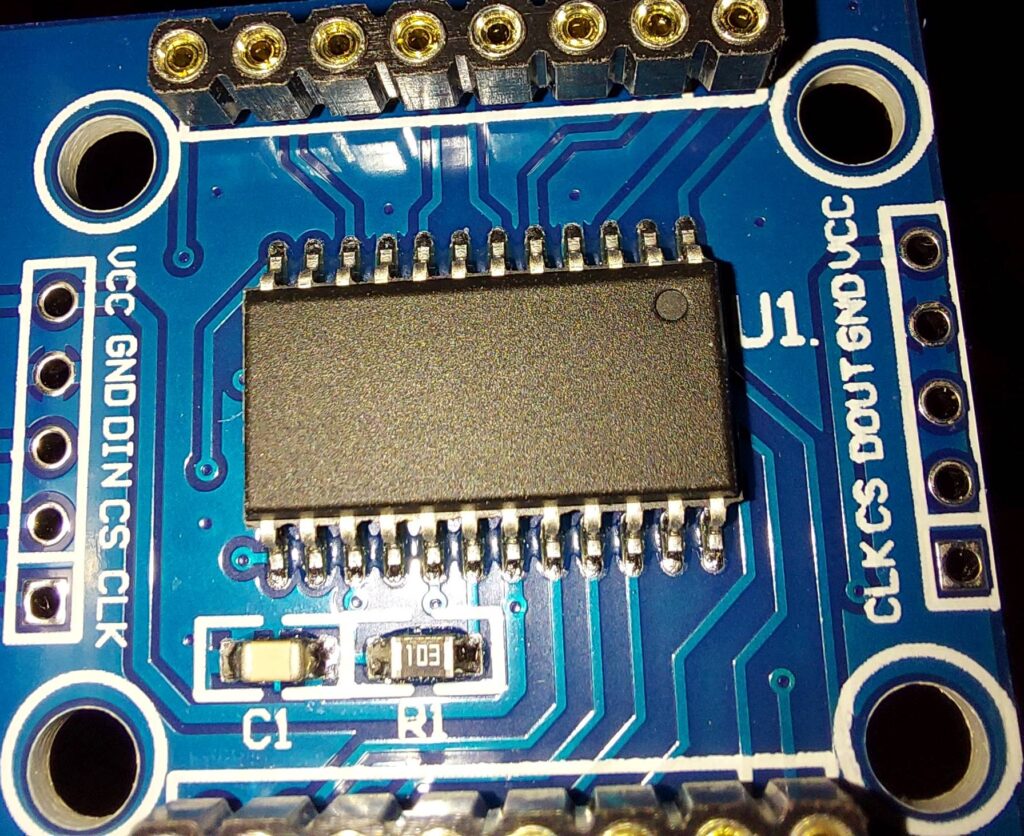
Weirdly, even though the modules are sold as (and work as) MAX7219 chips, the ICs themselves seem to have had any identifying markings removed. (The original seller photos show both Maxim-branded (now part of Analog Devices) as well as the anonymous chips.)
A basic Arduino sketch (tested on ESP32) is up on GitHub. I’ll probably add digits next, if there isn’t a library already out there, suitable for these. They’d make a good compass display for the Santana.
Just don’t try to take a picture of them without strong lighting…